
The Mediterranean’s Unassuming Shrub, the Carob tree.
Worth Its weight in diamonds, the Mediterranean carob tree is Mallorca’s most useful plant and an extremely valued one in the world.
The Mediterranean Carob Tree is Mallorca’s most useful plant
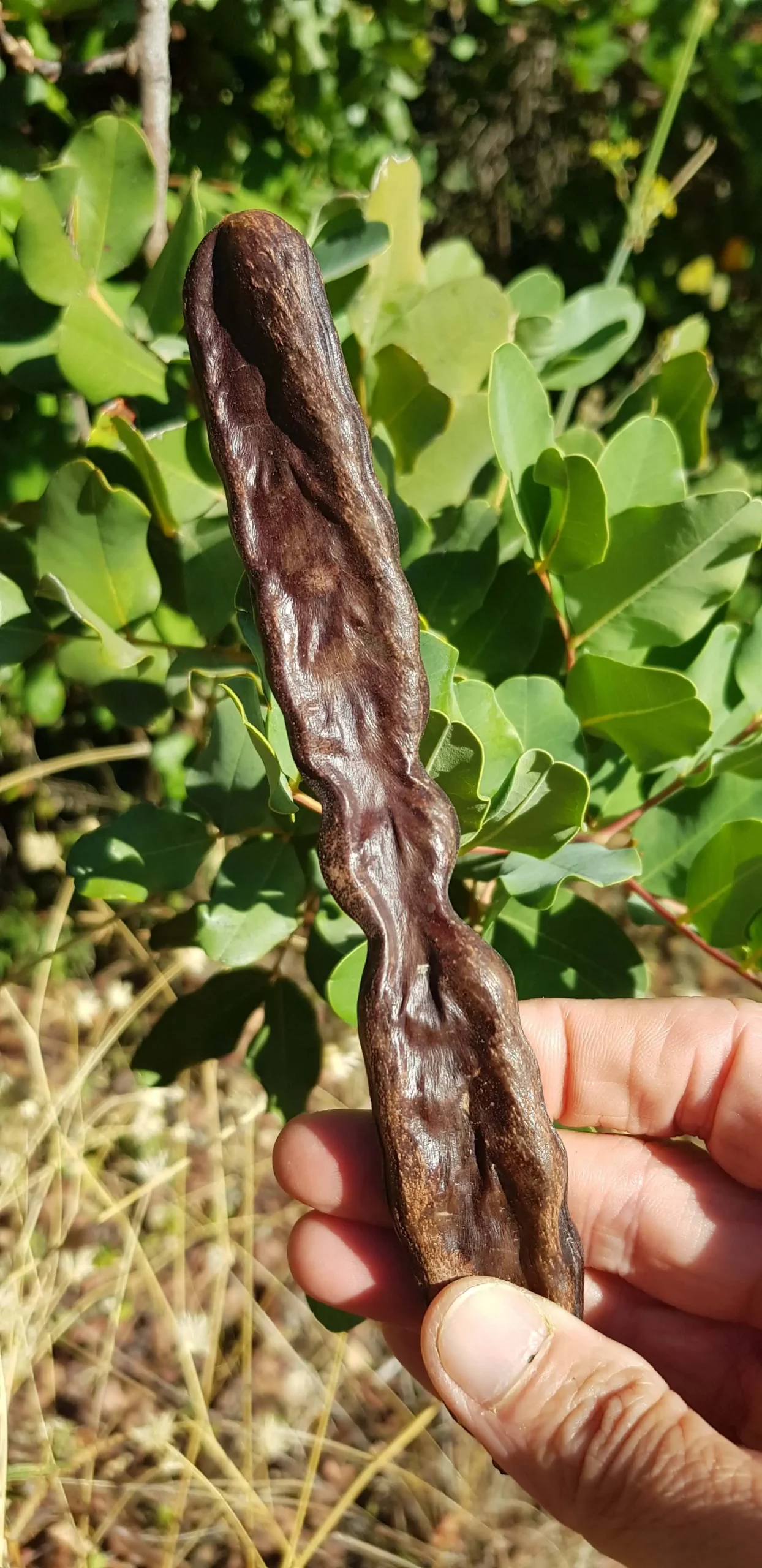
Cycling around Mallorca—and across many parts of Spain—you may notice an odd, stubby tree weighed down with long, dark pods. Strange fruit, you might think. But chances are, you already know it well.
Health Fads of the Carob
In the 1970s in North America and the UK, carob became a health-food sensation, marketed as a sugar-free alternative to chocolate.
And yet, the carob tree is far more than a sugar replacement, nor does its legacy reach back only 50 years.

The carob tree (Ceratonia siliqua) is a flowering evergreen belonging to the legume family. Native to the Mediterranean and Middle East, it has been cultivated for thousands of years. Today, it still remains a familiar sight in the landscape of southern Europe. In Valencia and the Balearics the tree is called “garrofer”. Whilst in other parts of Spain it is called “Algarrobo”. Whatever it’s name, it has many varieties with all being of great use.
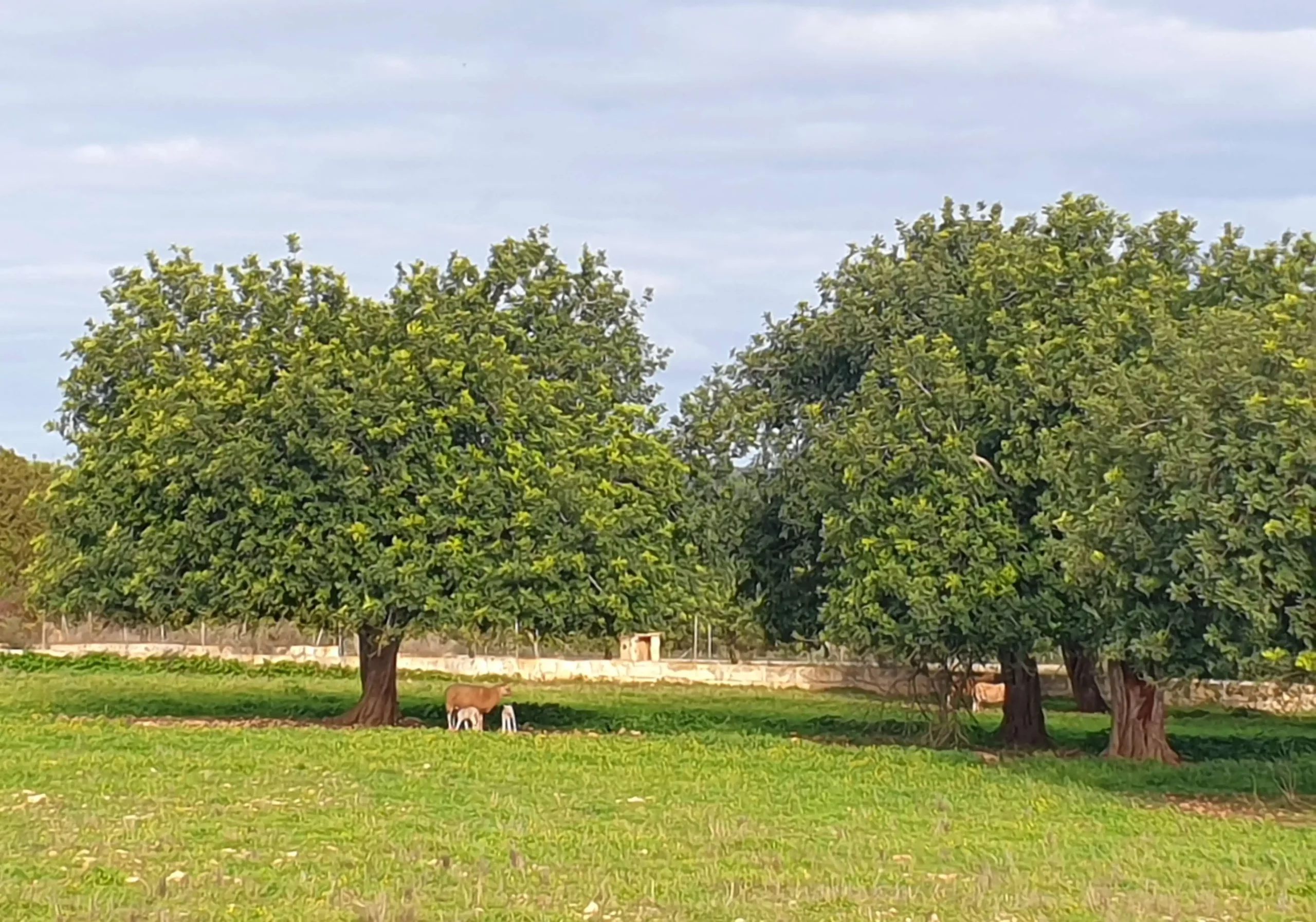
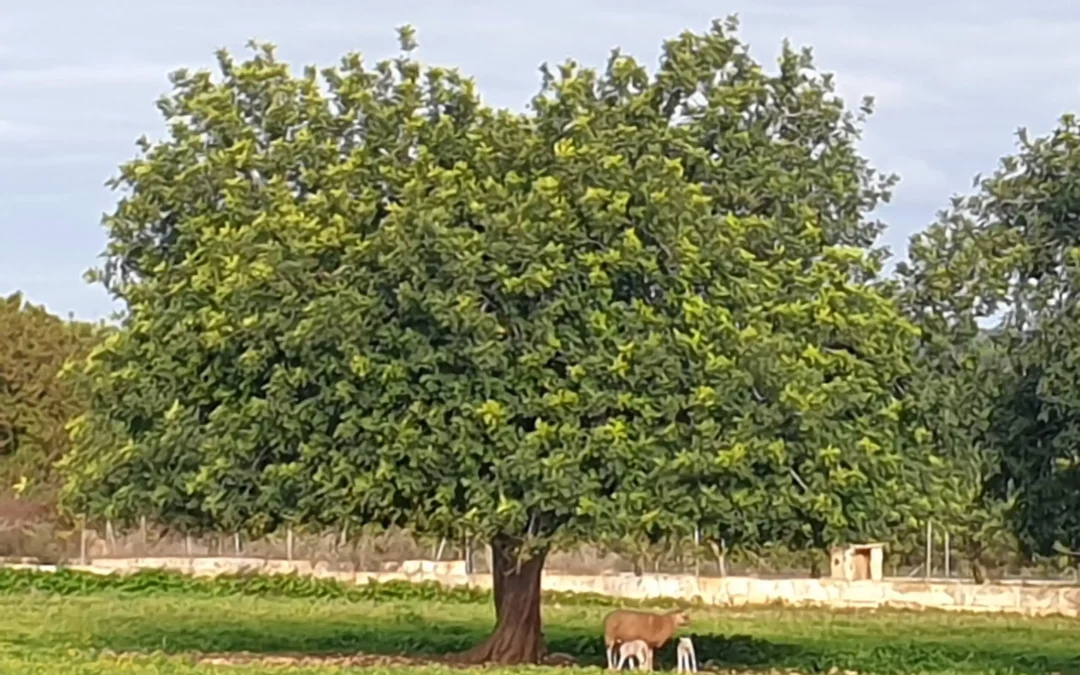
The carob drops her long, leathery pods onto streets and pastures, each year at harvest time (August to Oct). Quietly reveling in her rich agricultural history. In Mallorca’s small pastures, it is used to feed livestock and provides shade to sheep, goats, and cattle . A very valuable commodity in hard economic times and tough environmental ones as well. Historically, it even became a main source of survival and sustenance to the Mallorcan and mainland Spanish population. During the 1936 Spanish Civil war when food was scarce, it was used by many to stave off hunger.
The Carob plant, Sustainable and Beneficial
Today, often planted as an ornamental shrub, in Mediterranean gardens, the carob tree is exceptionally drought-tolerant. Equally, well adapted to hot and dry climates. Likewise, the tree helps prevent soil erosion particularly on Mallorca’s stone terraced steep hillsides of the Tramuntana mountains. They are also planted elsewhere in Spain’s sharp slopes surviving in baking summers and rainy winters. It is both shapely and very useful.
A gem of a tree!
A Botanical Curiosity of the Mediterranean

The Carob, A remarkable plant
Uniquely, most carob trees are dioecious. If you can’t remember High School Biology, it means individual trees are either male or female. Thus, cannot self-pollinate. Therefore male trees do not produce fruit, while female trees require pollination from the male tree. Typically this pollination is via insects such as bees, and crucially needed to bear pods. Remarkably, some carob trees, to help this process along, are even hermaphroditic, though this is less common.
Thus, this humble tree plays a solid part in the Mediterranean ecosystem.

The Carob tree, an ancient history
The name of the tree, itself, gives hint at a rich background. Interestingly the word, “carob” is from French, which has taken it from the Arabic “Kharrub”. This moniker has origins in Persia, which may have possibly gained it from Aramaic, the language of the Bible. What a long trip for this little shrub to come! Obliquely it is mentioned in ancient texts, with the Greek word for the insect “locust” (akris) being similar to the word for carob bean. Due to this misnomer, it has adds to the confusion in ancient texts of what is being spoken of.
Consequently, it is often called, the locust tree. Given this, the term “St. John’s Bread” referring to the Carob, comes from the Biblical story detailing how an exiled St. John, survived on the pod’s internal paste/beans (rather than actual insects).
In Mallorca and Spain, although existing in pre-Roman times, it generally, was more heavily introduced by the Moors as a firm favourite of theirs from their homes across the Med. Today, Mallorca’s dependency on it economically and as well, being an important element in sustainability, makes it still today a powerful plant.

The Mediterranean Carob Tree is Mallorca’s most useful plant and why it still matters Today
It is a mainstay of the Balearic island’s agricultural economy and ecosystem
What can you do with this humble pod? Grind up a pod and smell it’s warm sweet woody caramel essence. It will give you a hint at its possible use.
Around 28% of Spain’s carob production is located in the small area of the Balearic Islands (primarily Mallorca and Ibiza) and they export to over 30 countries around the world. Although the country is one of the biggest exporters, you really won’t see it obviously on any store shelf. The main carob products are shipped worldwide in 3 main ways.
1) Pulped, the bean is made into a gum, used as a food thickener and binding agent.
2) Ground up and pulverize the pod into powder. In this manner, grew a very profitable Balaeric Island industry of using it as a cocoa powder replacement for syrups, energy drinks, baking and even chewing gum. Consequently, we even ran into a shop selling carob cookies in Mallorca.
3) Break up the pods for fodder, etc..
Equally, using all parts of the carob, it also is cut up and used for animal feeding and amazingly, even our cat actually was attracted to it and gave it a nibble.

Undoubtedly, this is no recent trend, as the Mediterranean world and Africa, from Palestine to Yeman, have used this little tree to enhance their desserts and diets. Indeed, from making a kind of molasses to a cold refreshing drink, it is and was a valued asset. Fit even for the Gods, as Egyptians extracted syrup from the pods, fermented it and produced a royal liquor for the pharaohs. Consequently, well loved by the ancients and Moderns alike.

Carbo, A tasty sugar replacement
After all, carob contains no caffeine and thus is able to give an energy boost without the normal negative effects. In this way, this sweet alternative to cocoa makes a great option for those steering clear of refined sugars. Whether due to diabetes, or weight loss ventures it has great benefits due to its dietary fiber and antioxidants. Accordingly a great bonus for lowering cholesterol.
The little Carob seed used to weigh Diamonds
Attractively, the little hard pea shaped beans inside the pod, are a tawny colour and remarkably perfectly uniform in shape and mass. As a matter of fact, these were used as weights, by ancient gem sellers. Needing a standard object of measurements to weigh their precious stones, the carob was chosen. Interestingly, the word carat comes from the Arabic word “qīrāṭ” deriving from the Greek “keration”, meaning “carob seed.”. The measure we still use in our language of quantifying the value of gemstones today!

The Mediterranean Carob, a sweet and useful tree!
Thus, as you cycle past the ungainly shrub with its dark dangly pods, give a thought to the joy it has brought to kitchens around the world for millenniums. Uniquely, it’s close tie to the gemstones of the world as a pinch hitter for jewels, has elevated the tiny carob to a place amongst royals.
It is a real diamond in the rough!